
Need to know: insulation
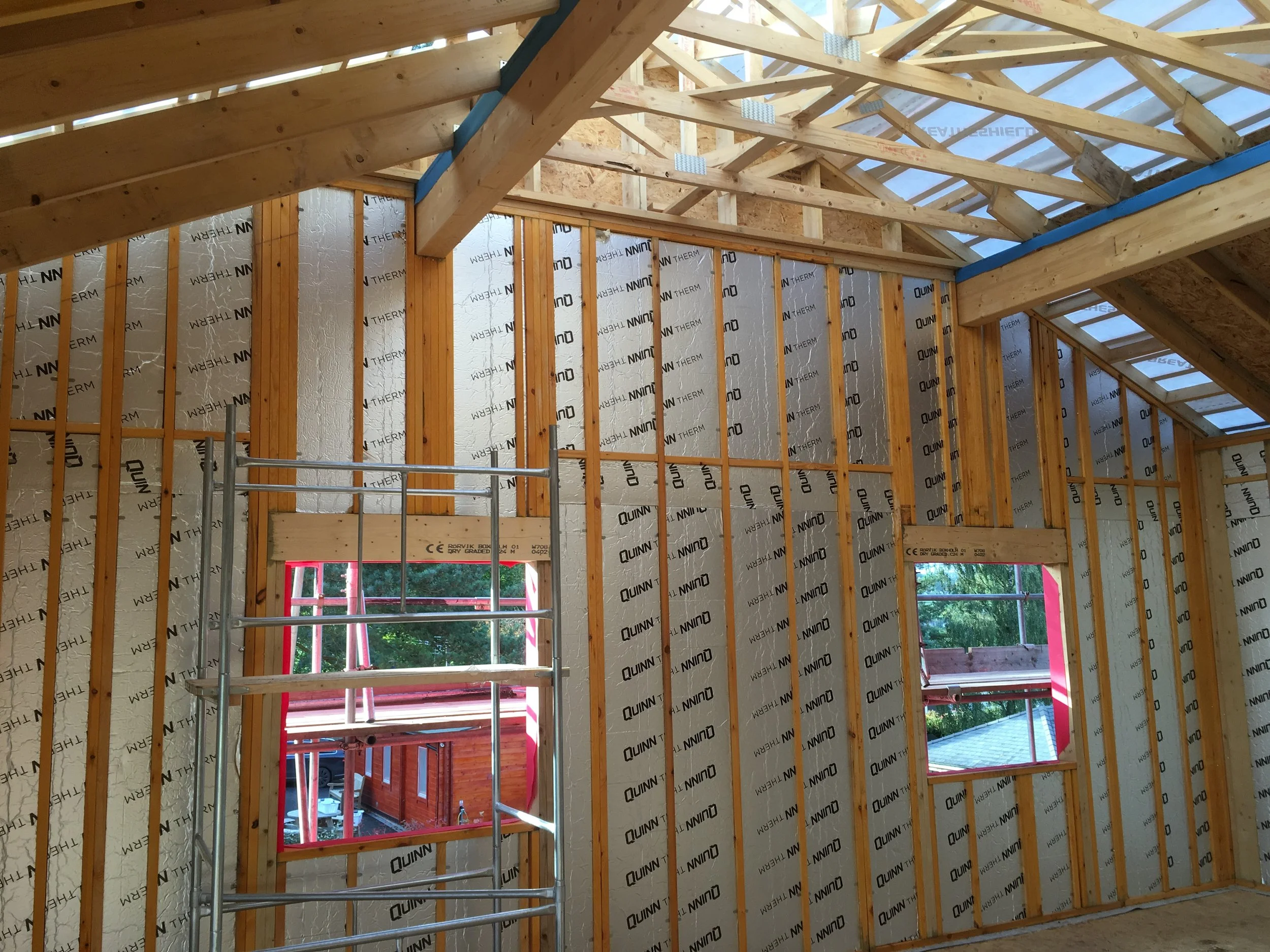
With news that our energy bills look set to increase yet again, it’s a timely reminder than when building your own home, you should ensure it is as well insulated as you can make it.
We asked Frame Technologies Managing Director, Simon Orrells for his advice on what to consider when it comes to insulation.
I want my home to be cosy. Where do I start?
Building with timber frame and using structurally insulated panel frame technology is the best way to insulate your home. This delivers exceptional energy-efficient building envelopes and helps to keep bills low for the lifetime of your home. Insulation also stops your home from over-heating in the summer - which is getting more important with the hot summers we are getting.
Choosing the right insulation for your self-build is a delicate balancing act. It’s not just about choosing insulation that keeps your home the warmest; it’s about selecting an insulation material that complements the timber frame technology you will use in your new home, is readily available at a good price, meets your sustainability goals, and meets your budget.
Crucially, it is very important to get your timber frame manufacturer onboard before you start detailed design. They can advise on best panel and insulation solutions to suit your project and budget.
Why should I choose timber frame?
Timber frame delivers the most air-tight and energy-efficient envelope of any building material on the market, delivering a true fabric first, fit-and-forget solution.
The thermal efficiency of timber frame is one of the reasons why it is the most popular form of construction for self-builders.
High levels of insulation manufactured within the timber frame means that these homes are extremely economic to run. A well-insulated timber frame building reduces the amount of energy required to heat it, which means long term savings on heat and energy bills.
These solutions have been designed to deliver excellent thermal and airtightness properties, and as they are manufactured within a controlled factory environment, the performance is guaranteed, and waste is minimised. Closed panel timber frame systems can achieve U-values from 0.18 right down to 0.09 W/m²K.
Our three unique TechVantage systems have the ability to exceed regulations and deliver Passive House performance if that’s what your project requires.
Which type of insulation should I use?
The most common types of insulation used in the UK is polyurethane insulation which gives thinner overall wall solutions – around 75% of the UK self-build market use this option. This is the best insulation for the thinnest wall solution, and as it’s made in factory-controlled conditions, quality and thermal performance can be guaranteed.
Over recent years we’ve seen an increase in people opting for natural insulation options like glass wool or wood fibre, and some clients choose less common materials to help them meet their sustainability targets, such as sheep’s wool, wastepaper or plant-based products made from jute and hemp. However, natural insulations can be more expensive, and not as high performing as other insulations.
Regardless of which insulation method you choose, some architectural features of your home simply cause heat loss, including vaulted ceilings or floor to ceiling windows. Plus, barn conversions, pre-existing structures and extensions also all have varying requirements which you will need to factor in.
Your insulation choice may also be affected by current costs and availability of the resources available. Opting to build your self-build home with a timber frame provider means you will receive bespoke guidance on your insulation choice, including suggestions on what will work best with your timber frame system and provide suitable breathability. As always, the earlier you engage your timber frame provider, the more value and support can be provided.
Is insulation supplied as part of a timber frame package?
The traditional timber frame system offers factory-fitted rigid polyurethane insulation. As it comes as standard, it is normally supplied as part of a timber frame package. It’s very uncommon these days that a timber frame manufacturer would supply the frame without insulation included, as there would be no indication of the frame’s thermal/ airtight performance.
Timber frame suppliers will often give you insulation options, even in the first budget quote, so you can understand the choices available, and the costs associated from building regs to near Passive House standards.
What is thermal bridging?
Thermal bridging is when weak cold spots in the building envelope allow heat to pass through more easily via conduction. Instead of heating the building, heat is lost through transference to the envelope. This results in additional heat loss and can eventually lead to mould growth. It’s important to insulate your building in a way that reduces thermal bridging.
Timber frame providers combat thermal bridging by placing the insulation on the ‘room side’ of the timber frame panel, improving the airtightness. But, because insulation is placed on the room side of the panel, it’s also important to consider the thickness of your insulation material.
Why do I need to consider wall thickness?
The thicker the insulation attached to the room side of the timber frame panel, the more internal floor space you will lose. If floor space is valuable, we recommend choosing a thinner insulation type.
As insulation materials perform differently, the thickness needed to get the same level of performance will vary. For example, compared to polyurethane, natural insulation like sheep’s wool will need a wall thickness for an equal thermal insulation value, which means a larger volume of insulation. This means it will decrease the relative internal floor area to achieve the same insulating values.
Sometimes insulation is placed between and outside the studs, but this comes with problems; it could reduce the energy performance of your home or cause condensation.
Using increased wall thickness alongside a natural insulation material such as glass wool creates a breathable solution. At Frame Technologies, we achieve this by using the latest twin stud systems, achieving incredible 0.1 U-values with minimal to no thermal bridging.
What do I need to do about Standard Assessment Procedure?
At Frame Technologies, all of our insulation solutions comply with any Standard Assessment Procedure (SAP) and calculation requirements. We are able to carry out SAP calculations (required by building control) to measure how well your home performs thermally.
If you’re looking for advice or help with your self-build project, we can provide budget estimates for projects in early-stage planning or full quotations based on detailed drawings. Get in touch with us here.